
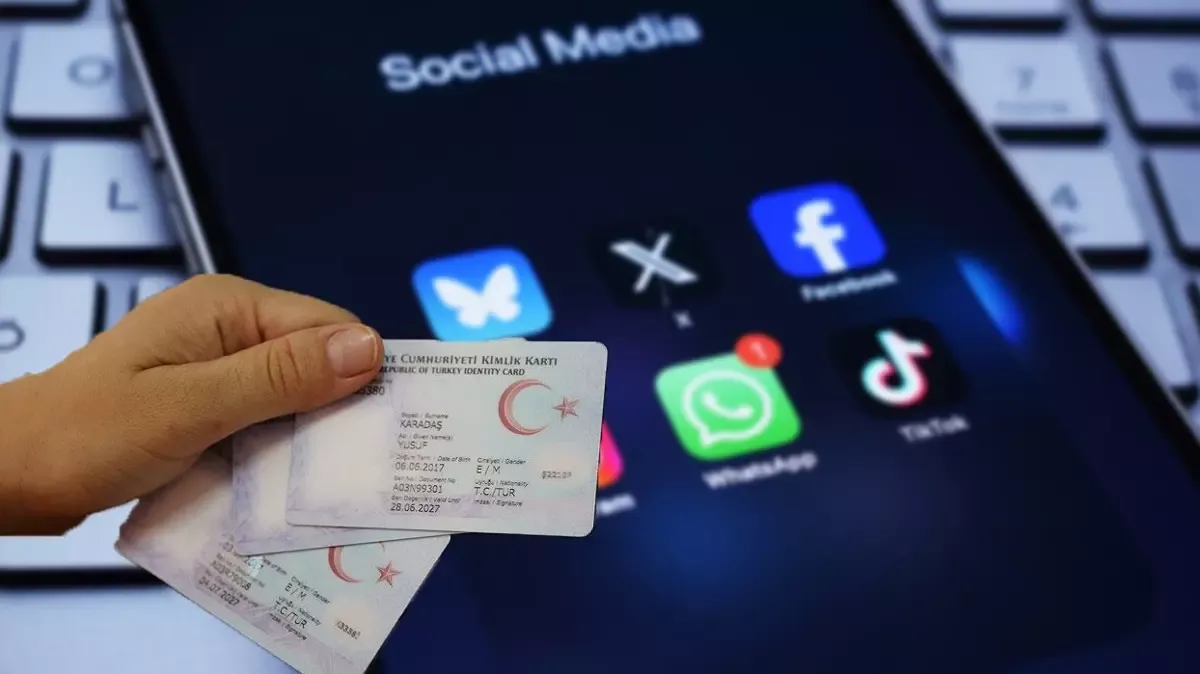
On Friday, April 3, 2026, Justice Minister Akin Gurlek made an announcement that will reshape Turkey's digital landscape: social media platforms will require identity verification for all users. National ID numbers and phone verification become mandatory. Timeline: 3 months. And the platforms have agreed.
- Announcement: April 3, 2026 — Justice Minister Akin Gurlek
- Transition period: 3 months after law takes effect
- Method: National ID + phone number + e-Devlet (e-Government) integration
- Target platforms: Instagram, TikTok, X, YouTube, Facebook, Discord
- Under 15: Complete ban on social media use
- Legal framework: 12th Judicial Reform Package — passed committee
- Non-compliance penalty: Account closure + TRY 1-30 million fines for platforms
What Happened? The April 3 Announcement

Speaking about the 12th Judicial Reform Package, Minister Gurlek delivered a clear message: "No user will be able to open or use a social media account without presenting their identity." According to Gurlek, social media companies have accepted this requirement — though none of the platforms have issued official confirmation.
"An era is beginning where users will be held legally responsible for their posts, insults, and character assassinations." — Akin Gurlek, Minister of Justice, April 3, 2026
The legislation is expected to pass parliament as the ruling coalition holds a majority. Once published in the Official Gazette, a 3-month transition period begins.
How Will It Work? Technical Details
According to the announced technical framework, the system will operate as follows:
- National ID verification: Users must enter their Turkish ID number when creating new accounts or verifying existing ones
- Phone verification: An SMS code will be sent to the phone number registered to the user's ID
- e-Government integration: A token system will be established between platforms and the e-Devlet system — platforms won't store your ID directly, only a verification token
- Existing accounts: Accounts that don't complete verification within the 3-month transition period will be closed
The token system is a critical detail: platforms don't see your national ID directly — they receive a verification token from e-Devlet. However, upon legal request, this token can be traced back to your identity — meaning anonymity ends practically, not just technically.
For another facet of Turkey's new turn on the international stage, read the end of 24 years of longing and Turkey at the World Cup.
How Will the Under-15 Ban Protect Children?

The second major change alongside identity verification: social media is completely banned for children under 15. According to the bill that passed the parliamentary committee:
- Social media platforms (Instagram, TikTok, X, etc.) cannot provide services to users under 15
- Age verification systems become mandatory — identity verification + parental consent mechanisms
- Users aged 15-18 will have parental control tools: account settings, purchase restrictions, usage time limits
- Non-compliant platforms face TRY 1-30 million fines and 90% bandwidth throttling
The law will take effect 6 months after publication in the Official Gazette. BTK (the telecom authority) will prepare the regulations for age criteria and implementation procedures during this period.
Which Platforms, Which Rules?
The regulation covers all major social media platforms. According to Minister Gurlek, platforms have agreed in principle — though no official confirmation from any company has been issued:
- Instagram / Facebook (Meta): Largest user base — approximately 57 million Instagram users in Turkey
- TikTok: Fastest-growing platform among young users — most debated regarding child safety
- X (formerly Twitter): The primary arena for political discourse — highest anonymous account usage
- YouTube: Subject to regulation for video content
- Discord: Platform where anonymous usage in gaming and community servers is widespread
The financial side of the structural-regulation wave shows up in TCMB's 118-tonne gold sale and its impact on your savings.
Privacy or Security? Which Argument Is Stronger?

This regulation can be evaluated from two opposing perspectives:
The security argument (government side):
- Disinformation campaigns through fake accounts and bots will end
- Identifying perpetrators of cyberbullying, defamation, and character assassination becomes easier
- Children will be better protected from harmful content and exploitation
- Legal accountability in the digital space will be established
The privacy argument (critics):
- The Freedom of Expression Association called it "digital profiling infrastructure under the guise of child protection"
- Function Creep risk: Once the government standardizes this identity verification gateway, expanding its scope requires only a single omnibus bill amendment
- Anonymous communication is vital for journalists, dissidents, and whistleblowers
- A centralized identity database becomes a prime target for cyberattacks
How Does the World Compare?

| Country | Approach | Outcome |
|---|---|---|
| China | Real-name mandatory since 2017 — ID required on all platforms | Integrated with censorship infrastructure; dissent silenced |
| South Korea | Made mandatory in 2007, struck down as unconstitutional in 2012 | Found to violate freedom of expression |
| EU (DSA) | No mandatory ID; platforms required to be transparent and moderate | User anonymity preserved; platforms held accountable |
| Australia | Under-16 social media ban approved in 2024 | Age verification pilot programs ongoing |
| Turkey (2026) | National ID + phone verification; under-15 total ban | One of the most comprehensive models in the world |
South Korea's experience is particularly noteworthy: the country implemented a similar system in 2007, but the Constitutional Court struck it down in 2012 for violating freedom of expression. Turkey's model is more comprehensive than South Korea's was.
Among the macro shocks shaping Turkey in the same period is how the Strait of Hormuz closure feeds your bills.
What Should You Do Now?
The regulation has not yet passed the full parliament, but it has committee approval and is expected to pass with the ruling majority. To prepare:
- Update your e-Devlet password — verification will likely go through the e-Government system
- Ensure your phone number is registered to your ID — SMS verification is critical
- Review your children's accounts — if they're under 15, accounts will be closed
- Decide about anonymous accounts — unverified accounts will be shut down after 3 months
- Follow the VPN debate — scenarios involving VPN access through other countries remain unclear
This regulation marks a turning point in Turkey's digital history. Whether it's the end of the anonymous internet or the beginning of a safer digital environment — only time will tell. But one thing is certain: in 3 months, everyone on social media will exist under their real identity.


Comments (0)
No comments yet. Be the first to comment.