

I've always followed space missions with a kind of respectful distance — NASA, ESA, JAXA were other people's stories. When Turkey's Space Agency (TUA) announced its first space program in 2022, I found it interesting. When the AYAP budget was approved in 2023, I started paying serious attention. When the 2026 budget showed ₺8.73 billion — a 72% year-over-year increase — and I learned the International Astronautical Congress (IAC) was coming to Antalya in October 2026 for the first time ever, I realized: I'm part of this story now.
This isn't a news summary or a celebratory piece. I want to look at AYAP's technical architecture, IAC 2026's significance within the global space ecosystem, and where Turkey actually stands in this race. What do the numbers point to, and what concretely changes for Turkish engineers?
- AYAP target: Hard landing on the Moon's surface (2026)
- Space budget 2025: ₺5.05 billion → 2026: ₺8.73 billion (+72%)
- IAC 2026: International Astronautical Congress in Turkey for the first time — October 2026, Antalya
- 9,000+ expected delegates, 70+ countries, 500+ organizations
- Turkey ranking: #1 in space budget growth rate among 30+ space-active nations (2024-2026)
- Domestic satellite: Türksat 6A reached orbit in 2024 — national capability validated
1. What Is AYAP? Why a Hard Landing?
AYAP stands for "Aya Yolculuk Anlık Programı" — Turkey's Lunar Journey Immediate Program. The target: land a vehicle on the Moon's surface in 2026 — initially through a controlled hard landing rather than a soft one.
The distinction between hard and soft landing matters: a soft landing means the spacecraft touches down intact and can operate scientific instruments — India's Chandrayaan-3 achieved this. A hard landing is a controlled impact: the vehicle sustains damage, but orbital mechanics, navigation, and communication data are successfully collected. Technically far more achievable, but a critical threshold for any country building space engineering capability from the ground up.
Why does this step matter? Because the list of countries that have successfully hard-landed on the Moon remains very short: the United States, the Soviet Union (historically), China, India, Japan (SLIM, 2024). Turkey is about to join that list. This list isn't just technological credibility — it's the right to sit at the table in space commerce negotiations.
2. AYAP's Technical Architecture: Autonomous Systems and Space Software
What makes AYAP technically fascinating to me is that its component challenges are space-environment versions of problems we solve on the ground: autonomous decision-making, fault-tolerant architecture, reliable communication over minimal bandwidth. These map deeply to what we do in Kubernetes orchestration, distributed databases, and resilient system design.
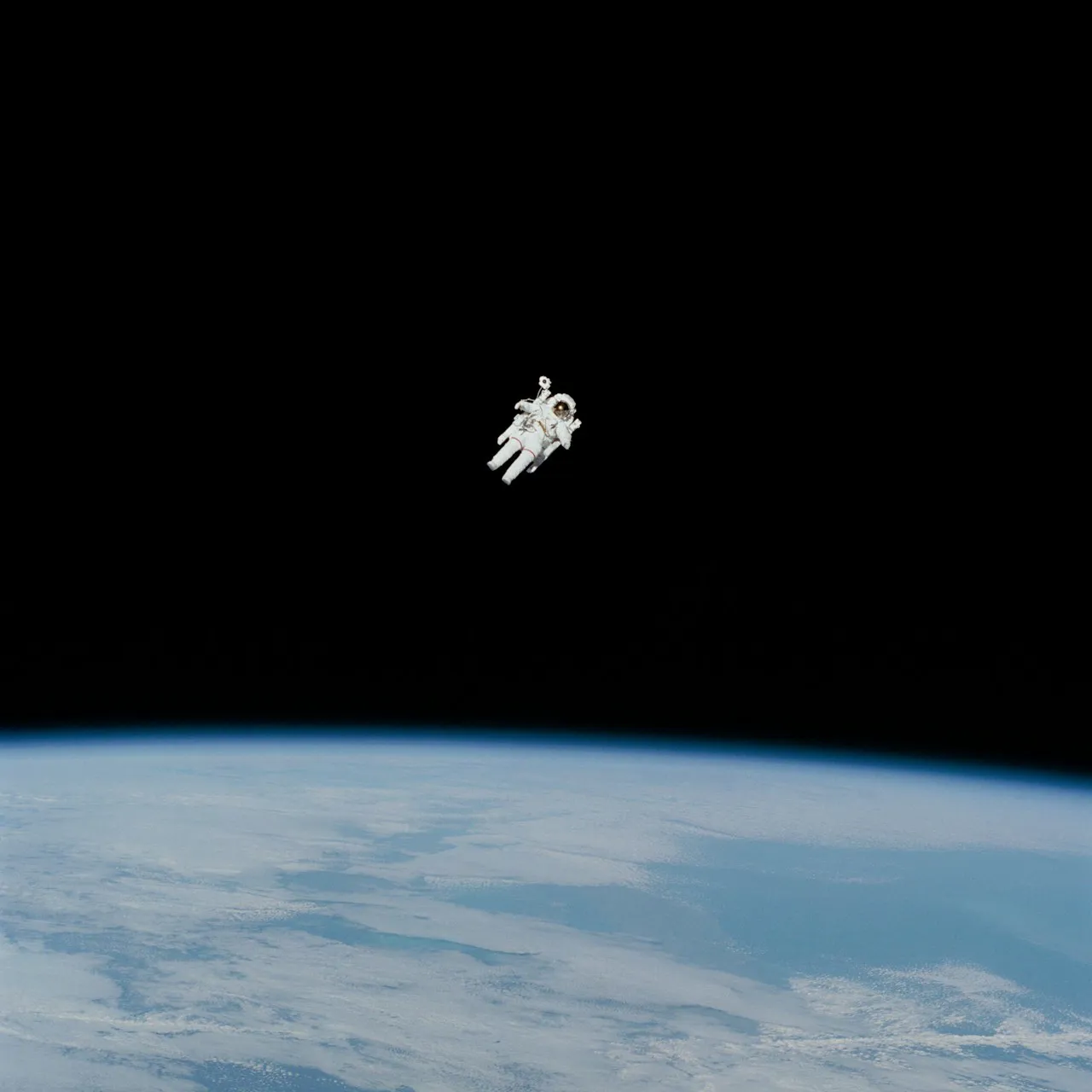
Space software operates under three hard constraints: latency (Earth-Moon signal delay ~1.3 seconds), radiation tolerance (cosmic radiation causes bit flips — hardware and software-level error correction is mandatory), and resource constraints (energy and compute are strictly limited — every line of code must justify its weight).
What do these constraints mean for a mission like AYAP? Autonomous systems that can make local decisions without waiting for Earth-side commands. Fault-tolerant architecture that guarantees consistency even through data loss or communication dropout. And telemetry infrastructure that can be monitored from hundreds of millions of kilometers away on minimal bandwidth. These are the space equivalents of cloud-native distributed systems.
3. Turkey's Space Budget: The Strategy Behind the 72% Surge
The numbers are unambiguous: Turkey's space budget jumped from ₺5.05 billion in 2025 to ₺8.73 billion in 2026. Seventy-two percent. This isn't coincidence — it's deliberate prioritization. Why now, and why this fast?

| Country / Agency | 2026 Target | Annual Budget (USD) | Key Mission |
|---|---|---|---|
| USA / NASA | Artemis II crewed Moon flight | ~\ billion | Orion + SLS, crewed lunar return |
| China / CNSA | Chang'e 7 lunar south pole | ~\ billion | Lunar resource survey, Tiangong station |
| Europe / ESA | Hera mission, Ariane 6 | ~\ billion | Asteroid defense, orbital services |
| Japan / JAXA | SLIM follow-up, H3 rocket | ~\.5 billion | Precision landing technology |
| India / ISRO | Chandrayaan-4 planning | ~\.5 billion | Lunar south pole, Gaganyaan |
| Turkey / TUA | AYAP hard landing | ~\ million | Lunar surface data, autonomous landing |
Two strategic drivers stand out. First, defense industry transformation: Turkey's decade-long investment in defense technology capacity (ASELSAN, ROKETSAN, Baykar) creates a natural foundation for space systems. Same engineering talent pool, same supply chains, different application domain. Second, geopolitical positioning: countries with space programs sit at different diplomatic tables. Hosting IAC 2026 is the symbolic peak of that repositioning.
4. IAC 2026 Antalya: Why This Congress Matters
The International Astronautical Congress is space's largest annual gathering. NASA administrators, ESA engineers, SpaceX, Blue Origin, Airbus Defence — all present papers, sign agreements, and form partnerships here. In 2024 it was in Milan; 2025 in Sydney. In 2026, for the first time, it's in Turkey — Antalya in October.
This isn't just an organizational achievement. Where IAC is held is voted on by the international space community. Antalya's selection is formal recognition that Turkey's space program has earned global legitimacy. In October 2026, 9,000+ delegates will gather in Turkey: researchers, engineers, investors, policymakers from 70+ countries. The ripple effects will extend well beyond congress week.

For Turkey's startup ecosystem, IAC 2026 presents a rare opportunity: companies operating in — or pivoting toward — space technology will have 9,000 qualified people in the same city. A booth at the congress, participation in side events, a well-prepared pitch — this can compress years of networking into a few days. The time to plan for this is now, not September 2026.
5. The Global Space Race 2026: Where Does Turkey Stand?
Let's be honest: Turkey is not in the same league as NASA or CNSA. No point pretending otherwise. But that's the wrong question. The right question is: as the space economy grows, can Turkey claim a share of that growth?
By 2026, the global space economy exceeds \ billion annually, with projections for \ trillion by 2030. Most of that is not in rocket launches or science missions — it's in satellite services, remote sensing, navigation, and space infrastructure. That is where Turkey's realistic claim lies.
Türksat 6A reaching orbit successfully in 2024, AYAP demonstrating system integration capability, and hosting IAC 2026 are consecutive strategic steps — not isolated achievements, but parts of a coherent positioning strategy.
6. Concrete Opportunities for Turkish Engineers
I'll answer this from a personal perspective: what does a space program mean for a software engineering career?
- Embedded systems and real-time software: Missions like AYAP require deep expertise in real-time operating systems (RTOS), resource-constrained embedded software, and hardware-software integration. There is a specialist gap in Turkey in this area, and as the program scales, that gap grows.
- Autonomous systems and decision algorithms: Environments where real-time human intervention is impossible due to communication latency require autonomous decision-making systems. Expertise here extends far beyond space — autonomous vehicles, industrial automation, and defense systems use the same foundational technologies.
- Reliable distributed systems: Data consistency, failure recovery, and telemetry management in space environments are the most demanding versions of cloud-native distributed systems challenges. That experience is sector-agnostic expertise.
- IAC 2026 network effect: Be in Antalya in October 2026. Plan the congress ticket now. For a Turkish engineer, being present in a community of 9,000 people is a rare window to connect with the global space ecosystem directly.

7. What This Means for Turkey's Software Sector
Space programs have historically been among the most productive channels for defense-to-civilian technology transfer. GPS is central to civilian life today, but it started as a military program. NASA's miniaturized electronic components laid the groundwork for the consumer electronics revolution.
For AYAP to generate this kind of transfer, the program needs to mature sufficiently and draw civilian software teams into the process. The most tangible near-term signal: defense industry companies (ASELSAN, STM, Baykar) developing space projects are opening wider doors to civilian software firms. Recognizing and preparing for that door is proactive, not reactive.
Space startups are still a niche in Turkey. But that's also what makes now the right time to ask: in whatever domain you work, where can a space angle be created? An agtech company using remote sensing data. A software layer optimizing satellite communication. An analytics service tracking space debris. These are real markets, and Turkey's emerging space identity provides the context for entering them.
Closing Thoughts
AYAP may be a prestige project. IAC 2026 Antalya may be an organizational achievement. But together they contain real variables for software engineers: a growing budget, international network access, technology transfer channels, and a rising national space identity. Ignoring these variables means leaving an opportunity sitting on the table.
Be in Antalya in October 2026. Plan for it now.



Comments (0)
No comments yet. Be the first to comment.