
AIOps, AI Observability & Autonomous Operations Engineering
Starting from 35,000.00
(7 ratings) 7966 views
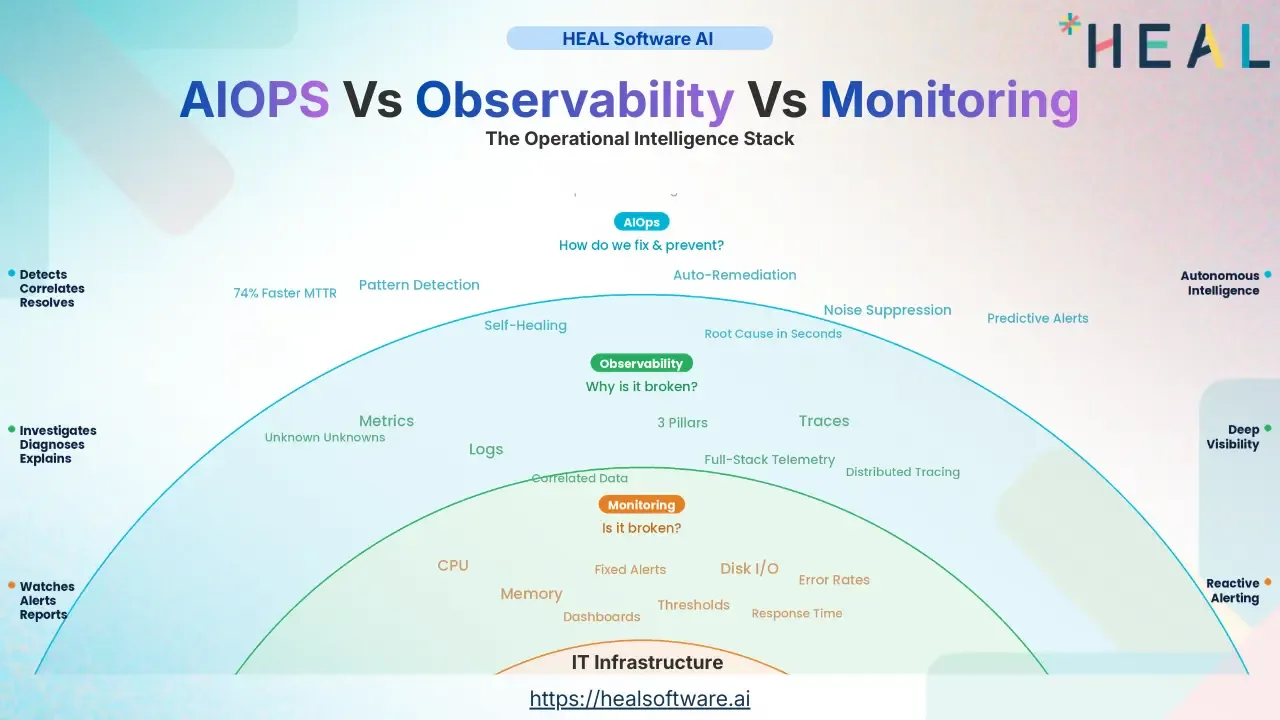
I unify logs, metrics, traces, and operational events into a single operational intelligence layer to make your systems more visible, more predictable, and more resilient. With AIOps, AI-powered observability, anomaly detection, root cause analysis, and autonomous response workflows, I help production operations move from reactive firefighting to proactive control.
SERVICE 3: AIOps, AI Observability & Autonomous Operations Engineering
In modern systems, the challenge is no longer just whether an application is running. The real challenge is identifying what is failing and why, detecting anomalies before users notice them, correlating events across the stack, narrowing down root causes, and automating safe actions where possible. I combine observability, artificial intelligence, and operations engineering to make your systems more visible, more resilient, and more predictable.
This is not just about collecting logs or building dashboards. The goal is to unify logs, metrics, traces, events, and alerts into a shared intelligence layer that gives operations teams real decision support. Instead of constantly reacting to incidents, teams move toward a model that detects problems earlier and manages them in a more controlled way.
Intelligent Operations Layer – High-Level Flow
| Telemetry Sources Logs, Metrics, Traces, Events |
Collection & Normalization Enrichment, correlation ID, labeling |
Observability Layer Dashboards, alerting, service maps |
AI Analysis Layer Anomaly detection, pattern discovery, RCA support |
Incident Management Incident triage, prioritization, noise reduction |
Autonomous Action Runbook automation, rollback, scale, notify |
Why This Service?
Many teams invest in observability but still lack real operational visibility. They have dashboards, but no meaningful correlation. They have alerts, but no confidence. They have logs, but those logs do not drive action. I turn those fragmented pieces into a single operational intelligence system.
| Traditional Approach | My Approach |
|---|---|
| Separate tools for logs, metrics, and traces | A unified observability architecture that correlates individual signals |
| Too many noisy alerts | Alert correlation, prioritization, and noise reduction |
| Manual incident investigation | AI-assisted pattern analysis and faster root cause narrowing |
| Reactive operations | Proactive and partially autonomous operations engineering |
My Architectural Approach
1) Telemetry Foundation: Unifying Logs, Metrics, and Traces
A healthy AIOps system cannot be built on fragmented telemetry. That is why the first step is to standardize operational data and make it correlatable. I structure correlation IDs, request tracing, service labels, deployment metadata, environment context, and error context so telemetry becomes operationally meaningful.
| Signal Type | What It Tells You | Operational Value |
|---|---|---|
| Log | Errors, events, and workflow details | Diagnosis and incident history |
| Metric | Resource usage, latency, throughput, saturation | Threshold tracking and trend visibility |
| Trace | The journey of requests across services | Bottleneck and dependency analysis |
| Event | Deploys, autoscaling, failover, queue spikes, config changes | Incident context and time-based correlation |
2) AI-Assisted Anomaly Detection and Event Correlation
Not all alerts have the same value. The real challenge is separating critical incidents from operational noise. That is why I complement traditional threshold-based monitoring with pattern detection, deviation analysis, behavioral change detection, and event correlation layers. This turns isolated alerts into meaningful incident clusters.
• API latency increase + RabbitMQ queue buildup + worker retry spikes
• New deployment + CPU spike + rising error rate
• Timeout increase for a specific tenant + slow database queries
• Cache hit ratio drop + response time degradation + sudden traffic spike
• Abnormally long trace spans across a particular service chain
3) Incident Intelligence and Root Cause Support
A major part of operational effort is spent just finding the problem. I design systems that accelerate that phase: grouping similar incidents, mapping them to historical cases, narrowing down likely root cause candidates, surfacing the most relevant log segments, and automatically recommending runbooks or next actions.
4) Autonomous Operations Workflows
Not every operational problem should require a human to intervene manually. Certain actions can be automated safely: service restarts, rollback flows, scale-out actions, cache flushes, increasing queue consumers, triggering validated runbook steps, notifying the right people, or opening incident records automatically. I design these flows not as uncontrolled automation, but as governed and auditable autonomous operations.
What I Deliver
| Solution Area | What I Provide |
|---|---|
| AI Observability Architecture | Unified visibility and correlation across logs, metrics, traces, and events |
| AIOps Design | Anomaly detection, alert correlation, incident prioritization, and pattern analysis |
| Root Cause Analysis Support | Probable RCA candidates, relevant log clusters, and trace-driven narrowing |
| Runbooks & Automation | Semi-automated or controlled autonomous response flows |
| Reliability Improvement | Reduced MTTR, higher alert confidence, and lower operational load |
Technologies I Work With
| Backend | .NET / C#, ASP.NET Core, event-driven services, background workers |
| Observability | OpenTelemetry, structured logging, distributed tracing, service maps |
| Monitoring & Analytics | Graylog, Prometheus, Grafana, alert pipelines, anomaly analysis |
| Messaging & Eventing | RabbitMQ, Kafka, MassTransit, event correlation strategies |
| Platform | Docker, Kubernetes, GitOps, Jenkins, GitLab CI, ArgoCD |
Operational Impact – Visual Summary
Example Operational Metrics
| Metric | Purpose | How It Is Tracked |
|---|---|---|
| MTTD | How quickly do we detect problems? | Alerts + anomaly detection + deployment correlation |
| MTTR | How quickly do we resolve problems? | Runbooks, RCA guidance, automated action support |
| Alert Precision | How accurate are our alerts? | Noise reduction, deduplication, correlation |
| Service Health Confidence | How clearly do we understand the true state of the system? | Unified dashboards + trace visibility + SLA/SLO views |
Project Deliverables
Depending on the project scope, one or more of the following deliverables can be provided:
| Deliverable | Description |
|---|---|
| Observability architecture | Telemetry collection, labeling, correlation, and dashboard design |
| AIOps analysis model | Anomaly detection, incident clustering, and noise reduction strategies |
| Runbooks & response workflows | Manual, semi-automated, or controlled autonomous response design |
| Operational dashboards | Different visibility views for leadership, SRE, developers, and operations teams |
Who Is This For?
- Teams running high-traffic systems with growing incident volume and slower recovery times
- Organizations that have monitoring tools but still lack real operational visibility
- Operations teams overwhelmed by alert noise and struggling to isolate critical incidents
- Companies that want faster root cause analysis across Kubernetes, microservices, and event-driven systems
- Technology organizations aiming to make operations AI-assisted and partially autonomous
Why Work With Me?
Because I approach operations as someone who has lived them in production, not as a theoretical framework. With real experience across high-traffic backend systems, event-driven architectures, queue-based workflows, Kubernetes, centralized logging, and request tracing, I build observability not just as a monitoring layer, but as an engineering system that directly improves reliability and response speed.
Outcome
The more complex your systems become, the more critical visibility becomes. A well-designed AIOps and AI observability model helps you detect issues earlier, reduce false alerts, narrow down root causes faster, and meaningfully lower operational load. I build this not at the dashboard level, but at the level of real operational impact.
Let’s take your system visibility and reliability to the next level.
Build an intelligent, measurable, and modern operations architecture instead of relying on reactive firefighting.