
Enterprise Microservices & Distributed Systems Architecture
Starting from 100,000.00
(4 ratings) 5638 views
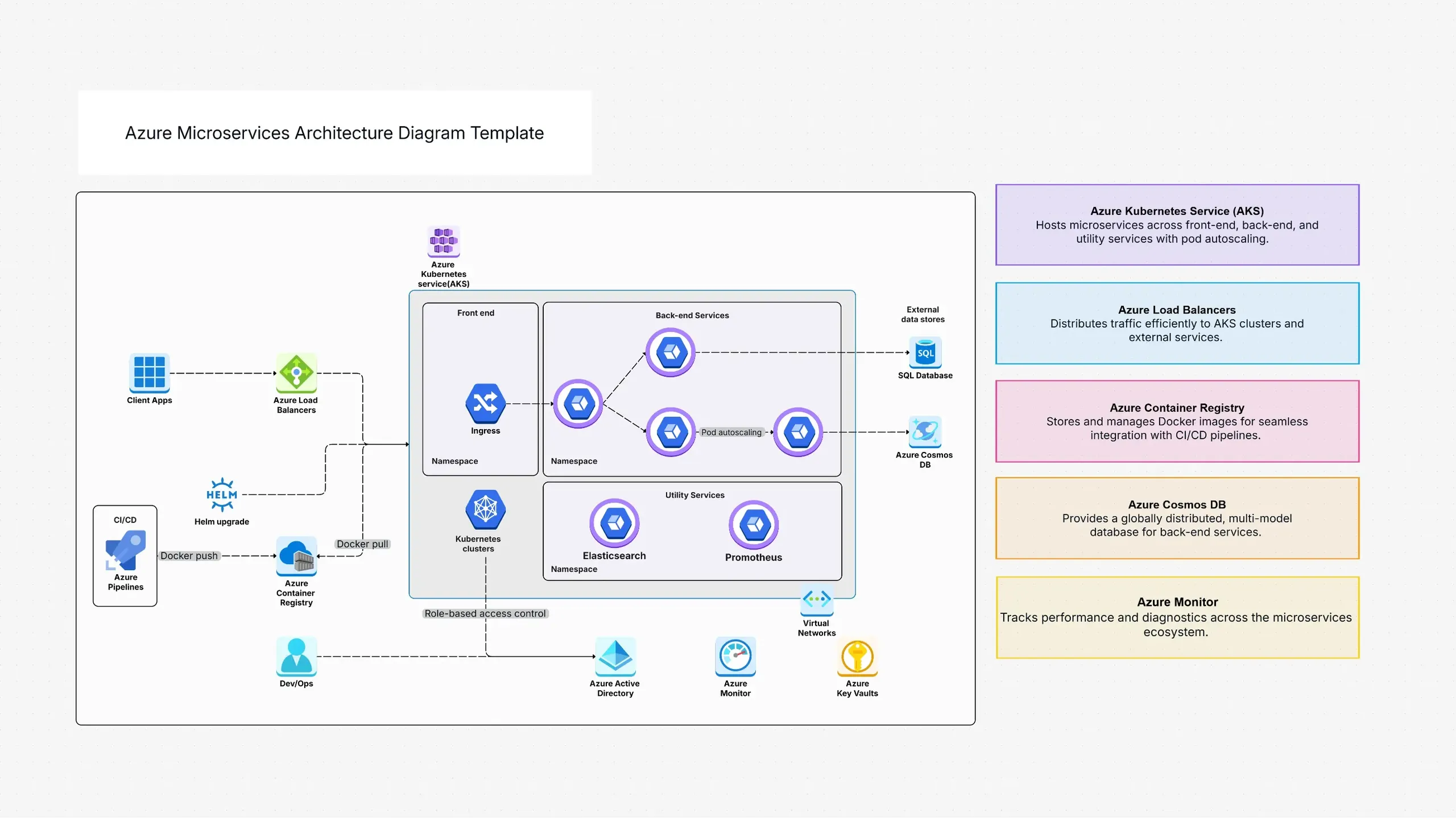
I design scalable, resilient, and high-throughput backend systems. With microservices architecture, event-driven design, Kubernetes infrastructure, and strong observability foundations, I build enterprise-grade systems that remain sustainable under real production load.
SERVICE 1: Enterprise Microservices & Distributed Systems Architecture
In modern software systems, the real challenge is not simply whether an application runs. What matters is building systems that can scale under growing traffic, tolerate failures, manage service dependencies correctly, remain observable, and stay sustainable over the long term. I solve this by designing enterprise-grade microservices and distributed system architectures.
I do not just build APIs. I design service boundaries, data flow, messaging models, deployment strategy, fault tolerance, observability layers, and operational reliability as a complete system. My goal is not to deliver short-term solutions that merely work, but to build production-grade systems that inspire confidence, support growth, and keep technical debt under control.
Enterprise Distributed System – High-Level Architecture Flow
| Client Layer Web, Mobile, B2B, Partner API |
Gateway / Edge API Gateway, Rate Limiting, Authentication |
Microservices Independent services based on bounded contexts |
Messaging Layer RabbitMQ / Kafka / Event Bus |
Data Layer MSSQL, PostgreSQL, Redis |
Operations Layer Kubernetes, CI/CD, Observability |
Why This Service?
Monolithic systems, tight coupling, unscalable data flows, painful deployments, and failure scenarios that affect the entire platform are common growth barriers in many organizations. Microservices architecture, when designed correctly, brings speed, team independence, better scalability, and more controlled operations. But when designed poorly, it turns into distributed chaos. That is where the real difference lies: I do not just recommend microservices, I design architectures that can survive and perform in production.
| Weak Approach | My Approach |
|---|---|
| A codebase merely split into multiple services | A domain-aligned service architecture with clearly defined boundaries |
| Heavy synchronous dependencies between services | An event-driven, loosely coupled communication model |
| Difficult deployments and difficult rollbacks | CI/CD, containerization, GitOps, and controlled versioning |
| Low visibility when something fails | Full visibility through tracing, centralized logging, telemetry, and alerting |
My Architectural Approach
1) Domain-Driven Service Decomposition
In microservices design, the first question is not “how many services should we build?” The first question should be “how should the business domain be divided?” That is why I evaluate bounded contexts, business responsibilities, data ownership, transaction flows, and team boundaries together. The objective is to create real service boundaries that achieve low coupling and high cohesion.
2) Event-Driven and Resilient Communication
Trying to solve everything with REST eventually becomes a scaling problem, especially in high-throughput and transaction-heavy systems. That is why I introduce event-driven architecture, asynchronous processing, queue-based workflows, retry strategies, dead-letter handling, idempotency, and eventual consistency where they truly belong. This ensures that the system does not merely function, but continues to operate under spikes, delays, and partial failures.
• APIs writing to queues and offloading heavy work asynchronously under high transaction volume
• Event-based orchestration of business flows across services
• Fault tolerance through retry, dead-letter, and fault-handling mechanisms
• Controlled consumption and backpressure management under traffic spikes
• Auditability and event history tracking for critical operations
3) Cloud-Native Platform and Kubernetes Layer
A strong distributed system is not built only at the code level. Its runtime platform must also be designed correctly. That is why I treat containerization, orchestration, resource policies, health checks, autoscaling, rollout strategies, and GitOps processes as natural parts of the architecture itself.
4) Observability, Reliability, and Operational Confidence
As the number of microservices grows, lack of visibility becomes one of the biggest risks. I build observability models where logs, metrics, traces, and operational events can be read together; requests can be followed through correlation IDs; and service health can be measured with confidence. This allows teams to stop guessing where the issue is and start seeing it directly.
Architecture Visuals
Microservices Architecture Approach
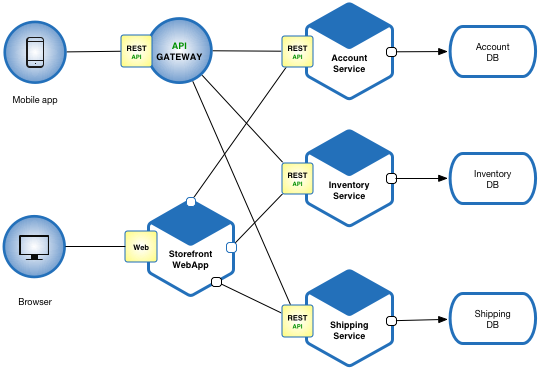
Distributed System Flows and Inter-Service Communication

Kubernetes Cluster Architecture

Real-World Impact Areas
| Improvement Area | Target Impact | Architectural Mechanism |
|---|---|---|
| Latency reduction | Faster user experience | Asynchronous processing, caching, correct service decomposition |
| Failure resilience | Preventing total system collapse | Retry, DLQ, circuit breaker, fallback flows |
| Scalability | Controlled growth under increasing traffic | Horizontal scaling, Kubernetes, queue-based load leveling |
| Operational visibility | Faster issue detection and diagnosis | Tracing, centralized logging, metrics, alerting |
Operational Impact – Visual Summary
What I Deliver
| Solution Area | What I Provide |
|---|---|
| Monolith → Microservices Transformation | Service decomposition, transition strategy, data flow design, and phased modernization planning |
| High-Traffic System Design | Backend architecture optimized for throughput, latency, and fault tolerance |
| Event-Driven Architecture Design | Queue topology, message flow, retry/DLQ, and resilient communication patterns |
| Kubernetes and Platform Layer | Containerization, deployment strategy, autoscaling, and GitOps-based delivery models |
| Observability and Reliability | Tracing, centralized logging, alerting, health modeling, and operational visibility |
Technologies I Work With
| Backend | .NET / C#, ASP.NET Core, REST APIs, gRPC |
| Architecture | Microservices, DDD, Event-Driven Architecture, CQRS, Clean Architecture |
| Messaging | RabbitMQ, Kafka, MassTransit, asynchronous processing |
| Data | MSSQL, PostgreSQL, Redis |
| DevOps & Platform | Docker, Kubernetes, Jenkins, GitLab CI, ArgoCD |
| Observability | Graylog, OpenTelemetry, Prometheus, Grafana |
Example Technical KPI Areas
| Metric | Purpose | Architectural Mapping |
|---|---|---|
| P95 / P99 Latency | Preserve performance on critical paths | Caching, async offloading, correct service decomposition |
| Throughput | Safely process more requests under load | Queue-based scaling, worker models, horizontal scaling |
| Error Rate | Maintain production quality and reliability | Retry policies, resilience patterns, fallback flows, observability |
| Deployment Frequency | Release more safely and more often | CI/CD, GitOps, independent service deployment models |
Who Is This For?
- Organizations whose monolithic architecture is slowing down growth
- Backend teams struggling under high traffic and heavy transactional load
- Technology organizations seeking to reduce inter-service coupling
- Companies moving toward Kubernetes-based modern platform architectures
- Teams that want stronger operational visibility and better fault tolerance
Why Work With Me?
Because I approach microservices architecture not as a theoretical concept, but through the lens of production performance, fault tolerance, deployment independence, and operational reliability. With real-world experience in high-traffic backend systems, event-driven architectures, queue-based workflows, Kubernetes, and observability layers, I design architecture not just at the diagram level, but to perform under real production conditions.
Outcome
A well-designed microservices and distributed systems architecture is not merely a technical preference. It directly affects business continuity, growth capacity, release velocity, and operational confidence. I can build this foundation correctly from scratch, or modernize an existing architecture in a controlled and sustainable way.
Let’s make your systems more scalable, more resilient, and easier to operate.
Let’s evaluate your current architecture together and build a strong distributed systems foundation at enterprise scale.