
Chaos Engineering: How to Build Resilient Microservice Systems with Netflix Chaos Monkey
In microservice architectures, the real question is not whether the system will fail, but when and under which conditions it will fail. Chaos Engineering makes real resilience visible by intentionally and controllably disrupting systems. Especially in Kubernetes, .NET, and distributed systems, many architectures that appear solid in theory can break unexpectedly under real production pressure. In this article, we take a practical and production-focused look at how resilient microservice systems should be designed through Netflix’s Chaos Monkey approach.
What Is Chaos Engineering?
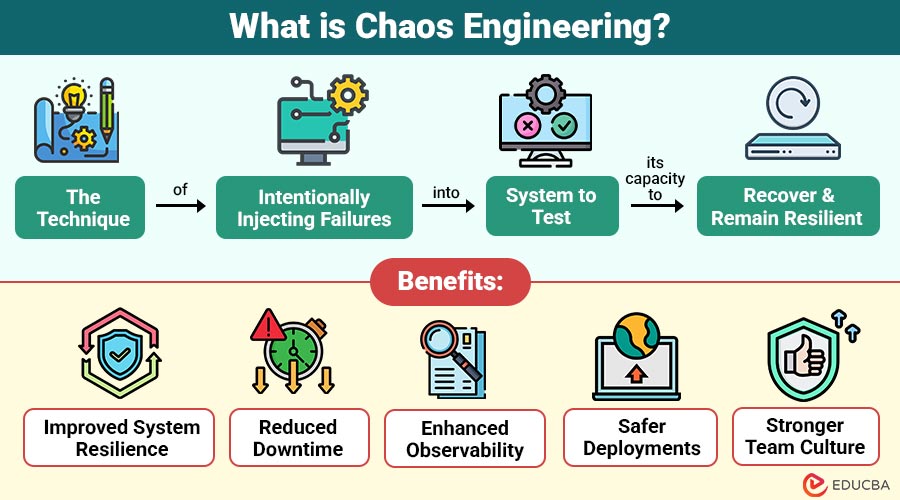
Chaos Engineering is an engineering discipline focused on testing how a system behaves not only under normal conditions, but also under failures, latency, resource pressure, and dependency issues. The goal is not to break systems randomly; the goal is to reveal weak points through controlled experiments before they surface in production.
Traditional tests mostly focus on “happy path” scenarios. In real production environments, however, a service may crash, network latency may increase, a pod may restart, a database may slow down, or a message queue may become temporarily unavailable. Real resilience is measured under precisely these kinds of disruptions.
How Does Netflix’s Chaos Monkey Work in Practice?
When Chaos Engineering is mentioned, Netflix is one of the first companies that comes to mind. Netflix approached distributed systems with the mindset that “failures are not exceptions, but part of the nature of the system,” and therefore developed tools that deliberately disrupt infrastructure components in order to measure system behavior. One of the most well-known symbols of this approach is Chaos Monkey.
The core question behind Chaos Monkey is this: if an instance, pod, or service component unexpectedly goes down, can the system continue to operate? If the loss of a single component causes a cascading failure, then the problem is not only that component, but a broader lack of resilience across the architecture.
Core principle: A resilient system is not built on the assumption that every component will always work flawlessly. It accepts that failures are inevitable, limits their impact, and makes recovery part of the design.
Why Is Chaos Engineering Necessary in Microservices?
Microservice architectures provide scalability, flexibility, and independent delivery advantages, but in return, operational complexity increases significantly. There is no longer a single application, but many interdependent services, queues, caches, databases, API gateways, network layers, and platform components. A practical Kubernetes observability and real-visitor telemetry approach details how this picture is made concrete.
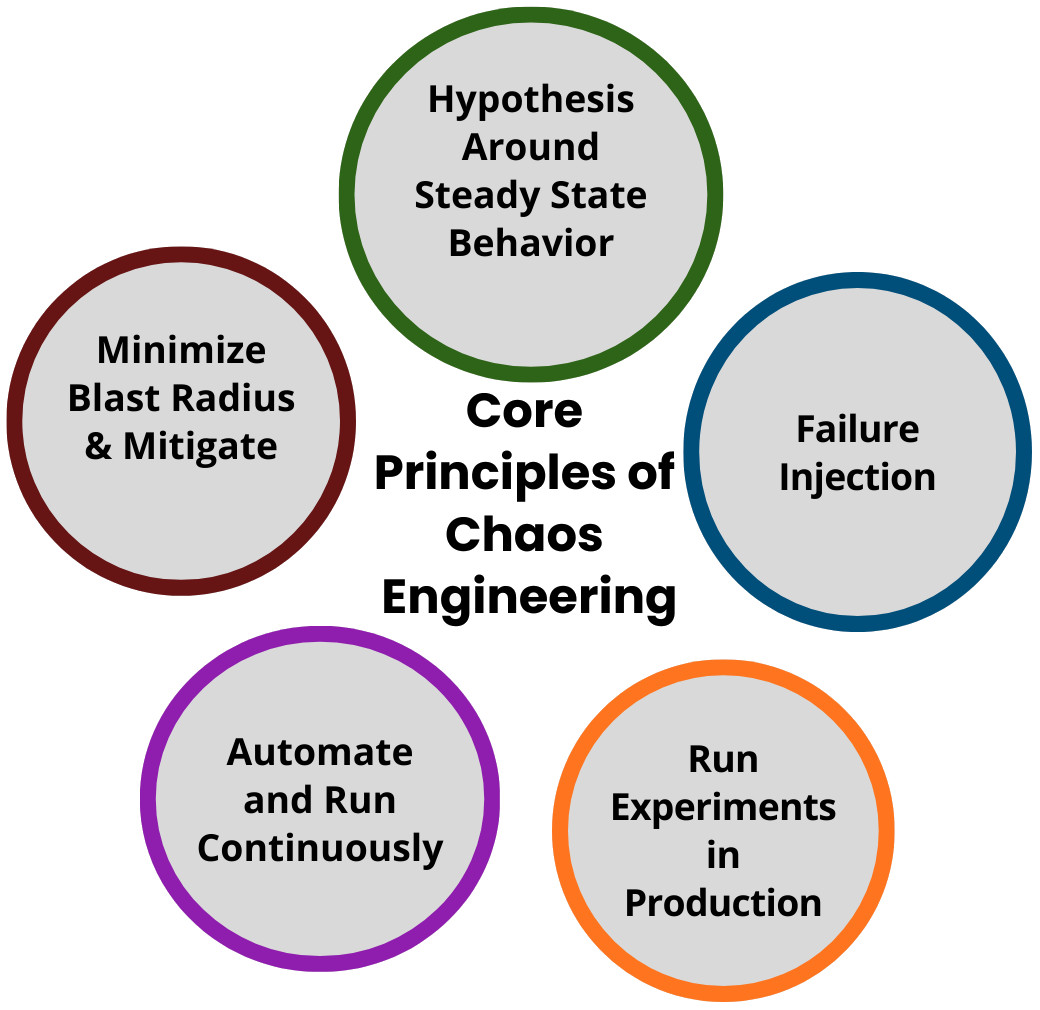
What Are the Core Principles of Chaos Engineering?
Clarify which metrics define healthy behavior: error rate, latency, throughput, queue backlog, or successfully completed transactions.
Example: “Even if one of the order service pods goes down, the system should continue to maintain its overall success rate.”
Instead of broad and destructive experiments, limited, measurable, and controlled experiments should be preferred.
Logs, metrics, traces, alerts, and user-facing effects should all be evaluated together.
The goal is not to create chaos, but to identify architectural fragility and improve it permanently.
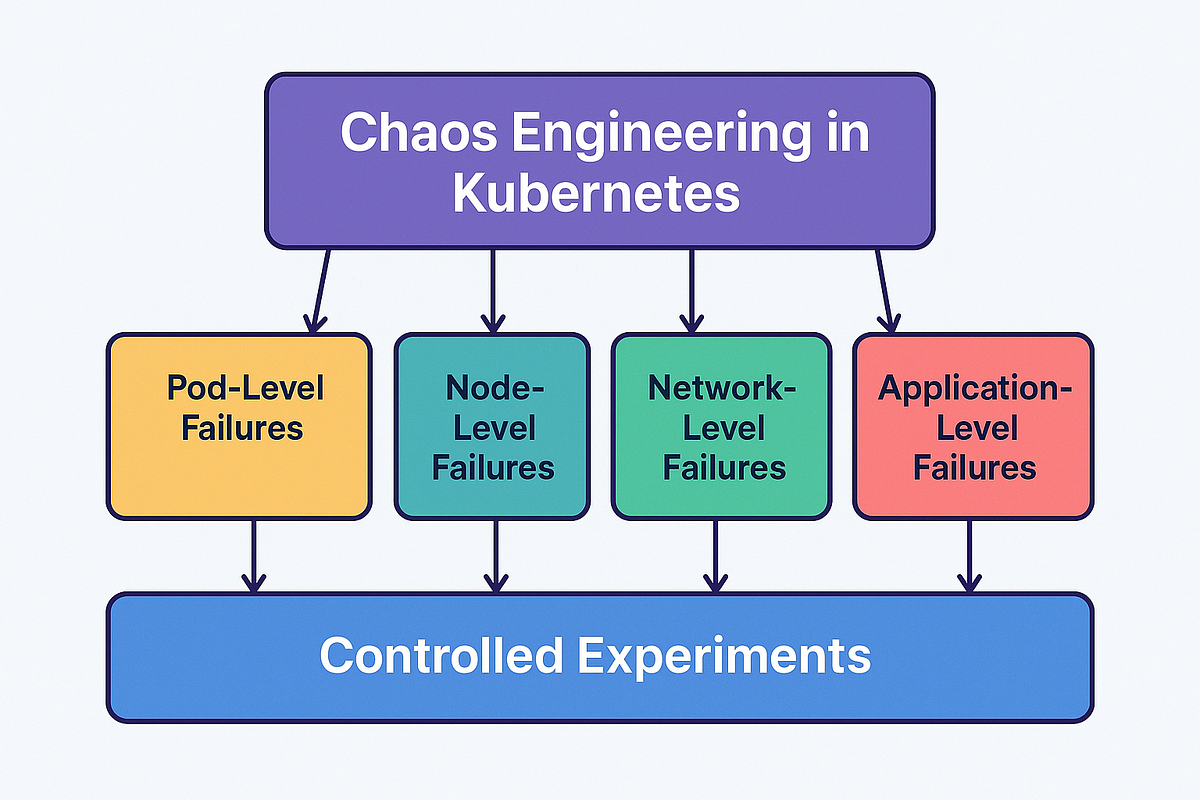
Which Chaos Scenarios Are Most Critical in Kubernetes?
Kubernetes is a natural environment for chaos experiments. Container restarts, node failures, resource pressure, scheduling changes, and network issues all directly affect real production behavior.
1. Pod Termination Tests
Intentionally terminating one of the pods shows whether self-healing and replica strategies actually work. Here, pod recovery time, readiness behavior, and error rates during transition should be monitored.
2. CPU and Memory Pressure
A service may appear stable under nominal load, yet sudden CPU spikes, memory pressure, or incorrect container limits can expose real bottlenecks. On the .NET side in particular, GC behavior and thread pool consumption should be monitored closely.
Incorrect container limits surface in this test, but the question belongs one step earlier: do the replica count and resource requests actually fit the node size? The Kubernetes resource budget calculator answers that before the chaos run begins.
3. Network Latency and Packet Loss
In distributed systems, many major incidents are caused not by direct service crashes, but by network slowdown. A dependency may still be up, but when latency increases, timeouts, retry storms, and connection pool pressure can emerge.
4. Node Failure
When a node becomes unreachable, services with a low replica count face significant risk. Anti-affinity, pod disruption budgets, and multi-replica strategies should be validated through experiments, not just on paper.
Resilience Design in .NET Microservices
Chaos Engineering should not be addressed only at the Kubernetes layer. If the application layer is poorly designed, infrastructure-level precautions alone will not be sufficient. In .NET services, the following topics are especially critical. On the edge layer, a Cloudflare WAF + IP blocklist architecture forms the outer ring of the same resilience chain:
Resilience does not mean the absence of failure; it means the system behaves in a controlled, observable, and recoverable way when failure occurs.

Timeout, retry, circuit breaker, and isolation patterns form the foundation of application-level resilience.
What Should Be Measured in Real Production Scenarios?
The value of a chaos test lies not only in killing a pod, but in correctly interpreting its effect on business output. For this reason, the following indicators should be monitored together:
- Request success rate
- P95 / P99 latency
- Error rate and error categories
- Message queue backlog level
- CPU, memory, and connection consumption
- Retry behavior and data consistency outcomes
- How quickly alerting and the observability layer make the issue visible
Even if the system appears technically alive, if the user experience is significantly degraded, this should be treated not as success, but as partial failure. Real resilience is not only about whether the process is running, but whether business output is preserved.
How Do You Start Chaos Engineering Safely in Practice?
What Are the Most Common Mistakes in Chaos Engineering?
- Running chaos tests without observability in place
- Testing only infrastructure while neglecting the application layer
- Mistaking retry usage for resilience
- Generalizing from a single test result
- Starting too early with a wide blast radius
- Failing to produce corrective technical actions after experiments
Conclusion
Chaos Engineering is no longer an advanced luxury in modern microservice and distributed system architectures; it is one of the most effective ways to measure real resilience. Netflix’s Chaos Monkey approach clearly shows that systems can only be truly understood under controlled failure conditions.
In .NET-based microservice platforms running on Kubernetes, resilience is not achieved simply by increasing autoscaling or replica counts. What truly makes the difference is consciously designing system behavior under failure. When timeout, retry, isolation, fallback, observability, and idempotency are addressed together, the architecture becomes much more reliable under real production pressure.
In short, the goal is not to build systems that never fail. The goal is to build systems that remain predictable, controlled, and recoverable when failure happens. That is where the true value of Chaos Engineering emerges. The same resilience mindset extends to newer layers such as AI agents accessing distributed services; on that front, how the MCP protocol is reshaping AI agents is a contemporary example worth reading.



Comments (1)
4/5/2026 12:33 AM
Güzel bir yazı olmuş. Tebrikler