
Oil markets are facing a structural unraveling not seen since the 1970s. According to a Bloomberg survey, OPEC production fell to 20.55 million barrels per day (mb/d) in April 2026. That figure is the lowest level since 1990. In March, production dropped 8.6 mb/d in a single month, the largest single-month contraction in decades. The cause isn't singular: the closure of the Strait of Hormuz, production losses in Kuwait and Iran, the severing of 17% of global LNG supply after the Iranian ballistic missile strike on Ras Laffan, and attacks on more than 80 energy facilities across the Gulf.
But the real turning point came on April 28, 2026. In an announcement issued via WAM (the official state news agency) and Aletihad newspaper, the United Arab Emirates declared its exit from OPEC and OPEC+. Effective May 1, 2026 (a Friday). The UAE had joined OPEC in 1967 through Abu Dhabi; a 59-year membership ended. The official rationale: "national interest, long-term strategic vision, evolving energy profile." Analysts put it more bluntly. According to Dubai-based QamarEnergy CEO Robin Mills, the move marks "the beginning of the end of OPEC." Pickering Energy Partners CIO Dan Pickering said the cartel's control over global supply will fall below 30%.
The same week, specifically as of May 7, 2026, we saw another piece fall into place. Iran created a new institution called the Persian Gulf Strait Authority (PGSA) and required vessels passing through the Strait of Hormuz to fill out a "Vessel Information Declaration" consisting of 40 questions. The unofficial fee for approved ships: \ million per transit; payment settled in Chinese yuan (CNY). According to CNN's estimate, the regime could earn \-800 million monthly from transit fees alone. In this article I cover the three layers of the event (the OPEC production floor, the UAE exit, and the Hormuz toll-booth regime) with concrete numbers; then I draw out the strategic meaning of the Saudi-UAE rift and the global impact picture. There are inline links from a Turkey vantage as well, but the article holds in a universal context.
1. OPEC's Lowest Production Since 1990: 20.55 Million Barrels
According to Bloomberg's monthly production survey, in April 2026 OPEC reduced its daily output by another 420 thousand barrels compared to the prior month and dropped to a total of 20.55 mb/d. That level hadn't been seen since 1990. In March, the decline was much steeper: a single-month loss of 8.6 mb/d, the largest monthly contraction in decades.
The anatomy behind the numbers: the effective closure of Hormuz directly hit an infrastructure that sells 85% of Gulf exports to Asia. According to the May 6 ECB readout, the net global oil supply loss is around 12 mb/d — about 11% of pre-war global supply. For comparison: an arc loss greater than the cumulative short-term effect of the 1973, 1979, and 2022 energy shocks combined.
What's interesting: when the UAE exit news hit on April 28, Brent was above \ and the price stayed unresponsive. As NPR put it: "a piece of news that would have triggered a dramatic price reaction in normal times did not move the market in real time." The reason is simple: the Hormuz closure rendered cartel-capacity discussion short-term moot. The UAE's reserve capacity matters when it can do something with it. And right now, due to the closure, it cannot.
2. UAE Left on April 28: A 59-Year Membership Ended
The UAE's exit announcement was issued via the WAM state news agency on April 28, 2026; effective May 1. The country had joined OPEC in 1967 through the Emirate of Abu Dhabi; the membership continued after the 1971 UAE federation. The official statement emphasized: "This decision reflects the UAE's long-term strategic and economic vision and evolving energy profile, including accelerated investment in domestic energy production, and reinforces its commitment to a responsible, reliable, and forward-looking role in global energy markets."
UAE Energy Minister Suhail Al Mazrouei spoke more bluntly in a CNN Connect the World interview — I'll quote that as a blockquote shortly. First, the numbers: the UAE's OPEC quota was 3.2 mb/d, but its real production capacity before the war had grown to 4.8 mb/d. 2027 target: 5 mb/d. So there was a 1.6 mb/d gap between quota and capacity — equivalent to about 1.5% of global oil demand.
OPEC's structural loss isn't small. According to Jamie Ingram (Middle East Economic Survey) and the IEA, the UAE's exit takes 13% — by some analysts, up to 15% — of the cartel's production capacity with it. Behind it remain 11 OPEC members and 10 additional members in the OPEC+ subgroup. Saudi Arabia, the de facto leader of the cartel, holds its position with ~9 mb/d production — but the role of "central stabilizer" is now far more fragile.
"Looking at what is happening to the Strait of Hormuz and the level of withdrawal of the strategic reserves… Taking the decision now will help the producers, to not feel the pressure on prices."
3. The Quota's Secret: 3.2 vs 4.8 mb/d — The Capacity/Permission Gap
OPEC's internal dispute went on for years. The mechanism: the cartel hands each member a production quota to manage the global supply/demand balance; the goal of the quota is to keep prices neither too high (kills demand) nor too low (kills member income). The problem: for a decade the UAE built capacity above its quota — Abu Dhabi's national company ADNOC invested billions to grow capacity from 3 mb/d to 5 mb/d. But the quota stayed at 3.2 mb/d.
Robin Mills (QamarEnergy) summarizes that gap: "The roughly 1.6 mb/d of spare capacity the UAE was holding back acted as an emergency cushion for OPEC against supply shocks. After the exit, that cushion is no longer the cartel's; it's a UAE commercial decision."
A deeper data point: per Al Jazeera, the UAE's long-term strategy is "to sell as much oil as possible in a post-Iran-war world where energy demand is in decline." Meaning, max out the value of existing reserves before fossil fuel demand declines. This is the opposite of Saudi Arabia's classic OPEC strategy: the Saudis try to keep supply tight to keep prices high to meet high-budget needs; the UAE says "produce to the market."
| Producer | OPEC Quota | Pre-War Capacity | Active Status (Mar-Apr 2026) | Position |
|---|---|---|---|---|
| UAE | 3.2 mb/d | 4.8 mb/d | Restricted by Hormuz | Out of OPEC (May 1, 2026) |
| Saudi Arabia | ~9 mb/d | ~12 mb/d | Partly to Yanbu via East-West pipeline | OPEC leader (de facto) |
| Iran | OPEC-quoted | ~3.3 mb/d | Under US blockade | OPEC member |
| Kuwait | OPEC-quoted | ~2.7 mb/d | Deeper loss in April | OPEC member |
| Total OPEC production (April) | — | — | 20.55 mb/d (lowest since 1990) | — |
| OPEC capacity loss (UAE exit) | — | — | 13-15% (IEA / MEES) | — |
| Expected supply increase (post-war) | — | — | ~1.6 mb/d from UAE (1.5% of global demand) | — |
4. The Strait's Authority: PGSA, the "Vessel Information Declaration" and the \ Million Transit
Iran's new regime over Hormuz began taking shape as a "toll booth" from mid-March 2026, but as of May 7, 2026 it was elevated into a formal institution. The new state body, Persian Gulf Strait Authority (PGSA), requires every ship wanting to transit Hormuz to fill out a 40-question "Vessel Information Declaration".
What does the form ask? According to CNN and Times Now, it requests: vessel name and identification number, "previous name" if any, country of origin and destination, owner and crew nationalities, cargo details, departure and destination ports, operator information. The form is emailed to PGSA; the email explicitly states that "complete and accurate information is essential" and that "further instructions will be communicated via email." Approved vessels are assigned a special Q-route between Qeshm and Larak islands, hugging the Iranian coast.
The factual situation on transit fees: per Lloyd's List Intelligence and Foreign Policy's March 2026 report, at least two ships paid \ million per crossing; payments settled in Chinese yuan (CNY). Indian-flagged cooking-gas tankers passed for free as a diplomatic gesture; some Malaysia, Egypt, and South Korea flagged ships also crossed. Vessels linked to the US or Israel are denied passage — the IRGC stated this position openly.
Iran's legal footing is weak. The country signed UNCLOS (the United Nations Convention on the Law of the Sea) in 1982 but never ratified it — neither did the United States. UNCLOS Article 19 guarantees the right of "innocent passage" through international straits. GCC Secretary-General Jasem Mohamed al-Budaiwi described Iran's practice as "aggression and a violation of the United Nations agreement on the law of the sea." ADNOC CEO Sultan al-Jaber was sharper: "economic terrorism."
| Hormuz "Toll Booth" Facts | Detail | Source |
|---|---|---|
| New authority | Persian Gulf Strait Authority (PGSA) | CNN, May 7, 2026 |
| Document | "Vessel Information Declaration" — 40+ questions | Lloyd's List + CNN |
| Transit fee | \ million / vessel (reported; at least 2 ships paid) | Lloyd's List + Foreign Policy |
| Payment currency | Chinese yuan (CNY) | Lloyd's List |
| Q-route location | Between Qeshm and Larak islands, hugging the Iranian coast | Foreign Policy + Naharnet |
| Escort and control | IRGC escort vessel + VHF radio check | Lloyd's List Intelligence |
| Examples of countries crossing | India (free, diplomatic), Malaysia, Egypt, South Korea | Foreign Policy + Oil Price Live |
| Denied | Vessels linked to the US and Israel | IRGC statement |
| Estimated monthly revenue | \-800 million (CNN estimate) | CNN, May 2026 |
| Legal status | Iran signed UNCLOS in 1982, never ratified — same for US | UNCLOS Article 19 |
| US position | OFAC: payments not authorized for US persons, secondary sanctions risk | OFAC FAQ, May 7, 2026 |
| Vessels passing (weekly) | 40 (week to May 3) — pre-war 120/day | Lloyd's List |
5. The Q-Route and IRGC Escort: The New Transit Anatomy (Qeshm-Larak Line)
In practice, transit works like this: a tanker enters the narrow corridor between Qeshm and Larak islands; an IRGC escort vessel accompanies it; throughout the passage a commander runs a VHF radio "radio check"; compliance with the previously submitted Vessel Information Declaration is verified. According to Lloyd's List Intelligence, the IRGC operates through "approximately intermediate" agents — meaning not a direct official channel but a gray zone.
The vessel counts tell the on-the-ground story. Only 40 ships transited Hormuz in the entire week to May 3, 2026. For comparison: pre-war daily average 120 ships. Active transit dropped to less than 5%. Asia oil imports were down 30% year-over-year in April — the lowest since October 2015 (Kpler data).
Number of seafarers stranded in the Gulf: about 20,000; ~1,000 ships are stuck inside the gulf — some for months. The Trump administration announced "Project Freedom" on May 5 as an operation to support transit through Hormuz, but it was halted within 48 hours through Pakistani mediation.
6. Revenue Estimate: \-800 Million Monthly and CNY-Denominated Payment
The toll-booth regime's economics are also contested. Per Oil Price Live's early-April analysis, at \ million per tanker, oil traffic — even running at a fraction of the pre-war normal — could generate ~\ million per day in revenue. Adding LNG carriers and other commercial vessels, the figure reaches the \-800 million monthly band (CNN estimate).
Iranian lawmaker Alaeddin Boroujerdi defended this position directly: "War has costs. Naturally, we must take transit fees from ships passing through the Strait of Hormuz." Another lawmaker — Mohammadreza Rezaei Kouchi — told Tasnim and Fars news agencies: "Parliament is pursuing a plan to formally codify Iran's sovereignty, control and oversight over the Strait of Hormuz, while also creating a source of revenue through the collection of fees."

The US position is clear-cut. The Treasury Department's OFAC (Office of Foreign Assets Control) updated its FAQ on May 7, 2026: "Payments to the government of Iran or the Islamic Revolutionary Guard Corps (IRGC), directly or indirectly, for safe passage through the Strait of Hormuz would not be authorized for US persons, including US financial institutions, or for US-owned or -controlled foreign entities." Furthermore, even non-US firms face secondary sanctions risk.
7. How Much Is OPEC Unraveling? The Strategic Meaning of the Saudi-UAE Rift
The strategic split between Saudi Arabia and the UAE isn't new, but April 2026 turned it into a clear breaking point. The Saudi position is classic OPEC: tighten supply → keep prices high → hit revenue targets. This logic is mandatory for Riyadh, which needs a \+ per barrel Brent price to finance the Vision 2030 reform program. Furthermore, the Hormuz alternative East-West pipeline (Yanbu outlet) is limited: capable of operating at about ~5 mb/d daily, the pipeline ran near full capacity in April-May.
The UAE's position is different. Abu Dhabi follows a "produce what the market takes" policy — the UAE's Fujairah pipeline bypasses Hormuz to the Gulf of Oman; despite its limited capacity, this infrastructure provides "strategic diversification." The combined transport capacity of the Saudi East-West + UAE Fujairah is still less than 50% of normal Hormuz volume.
In a Saudi official's view reported by Al Jazeera, "the UAE's move was a political decision; outside forces — under Western influence — sought to create division within the cartel." But sources close to the UAE Energy Ministry told AFP something different: "The UAE doesn't want to be constrained by quotas once Hormuz returns to normal." Meaning, the time has come to free the additional production capacity for the post-war "normal."
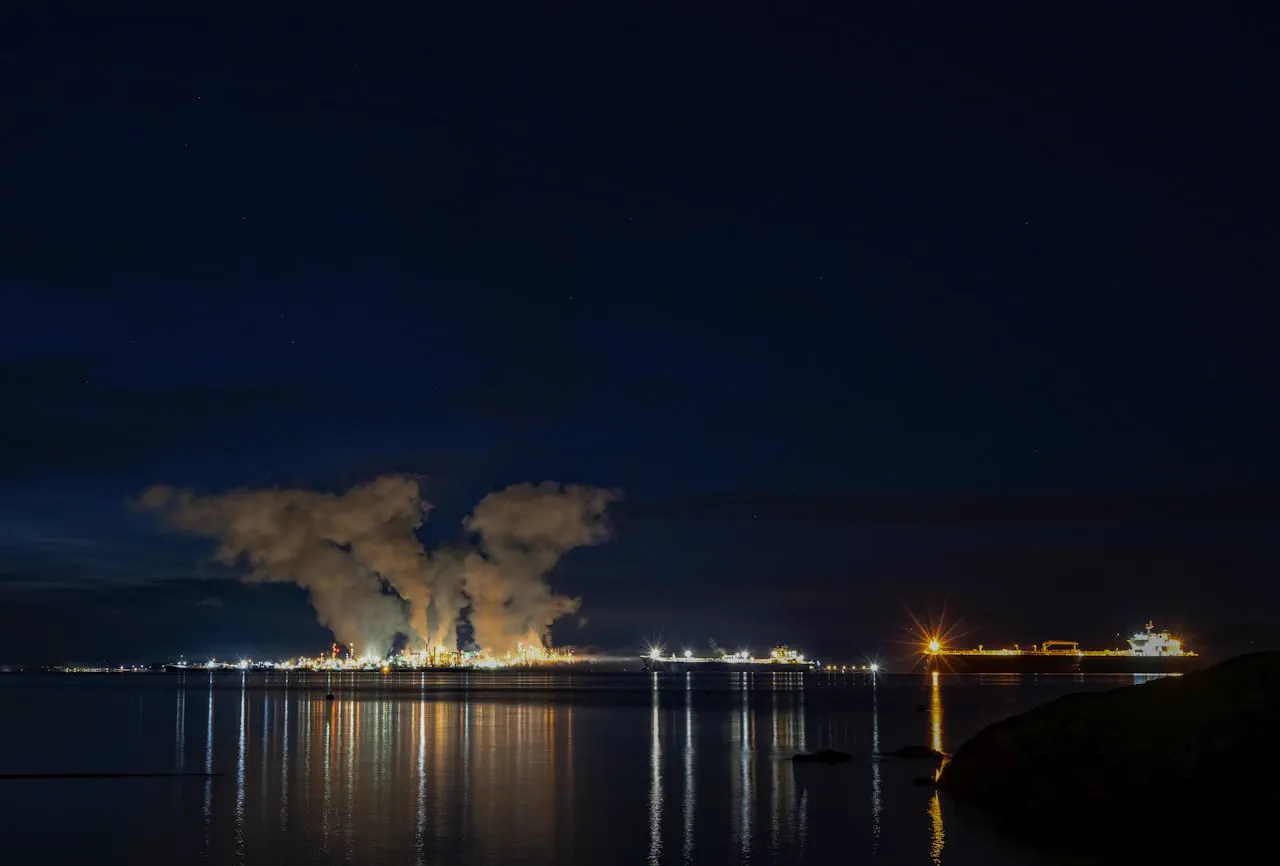
So the line independent analyst Abdoun used in Al Jazeera matters: "The real loser of the UAE's decision to leave OPEC is the very idea of a collective Arab fuel-producing-state capacity to shape the global energy order."
8. Global Impact: IEA's "Largest Energy Crisis in History," Brent \ Baseline
The impact of these three layers on the global economy is enormous. IEA Executive Director Fatih Birol, speaking in Ottawa on May 6, described the crisis as "the largest energy crisis in history" and said "the world has not yet completely understood the implications." According to the World Bank's Commodity Markets Outlook published April 28, the 2026 Brent forecast is \ per barrel baseline; in a worse scenario it could exceed \ per barrel. The 2025 average was \ per barrel — meaning a jump of more than 25%.
According to the ECB's May 6 Milan presentation, the net global oil supply loss is around ~12 mb/d — "greater than the cumulative short-term effect of the 1973, 1979, and 2022 energy shocks combined." In the Eurozone, April headline inflation rose to 3%; energy contributed 10.9%. In the ECB adverse scenario oil at \/MWh, gas at €87/MWh; in the severe scenario oil at \/barrel, gas at €106/MWh.
The German example is acute. Finance Minister Lars Klingbeil announced on May 7 that the 2026-2030 estimated tax-revenue projection had been cut by ~70 billion euros — "showing how much the war in Iran is harming our economy." Asia tells a similar story: Asian oil imports were down 30% year-over-year in April, and the Asian Development Bank cut its growth forecast from 5.1% to 4.7%. At ASEAN's Cebu summit (May 7), led by the Philippines, work continues on an oil-sharing framework agreement. In Turkey, in the same period, the BIST 100 index broke a historical record of 15,021.82 — driven by foreign investors moving into Turkish lira assets and the 5-year CDS dropping from 249 to 244 basis points.
9. Conclusion: Oil's Largest Structural Break Since the 1970s
When the three layers converge, what we have is this: oil markets' largest structural break since the 1970s. OPEC is in its weakest position since formation; the lowest production since 1990 and the exit of its most active member happened in the same week. This isn't a classic "price shock"; it's a sovereignty dispute over which institutions will manage supply and how.
Iran's PGSA / toll-booth regime is another dimension of the situation. Defended directly by an Iranian lawmaker with the slogan "war has costs", this structure stands on weak ground in international maritime law — but is active in field reality. CNN's estimated \-800 million monthly revenue is a serious cushion for Iran's economy under sanctions pressure.
Several open questions remain. (1) What will happen to Hormuz's future in US-Iran negotiations? Trump's "Project Freedom" initiative was halted in 48 hours; peace talks are at the bargaining table. (2) Will the UAE truly increase production "to the market", or will Saudi-UAE geopolitical tension take the front? (3) How will the EU-China Florence carbon pricing alliance position itself against the US's return to fossil fuels? (4) How will mid-size energy-importing economies like Turkey position themselves in this volatility — can the Hormuz alternative Baku-Ceyhan + TANAP infrastructure provide enough advantage?
From an observer's perspective, I can say this: what we have is not a "crisis" but a "structural realignment." Crises generally resolve and the old equilibrium returns; realignments never do. The UAE will not return to OPEC; once PGSA is established and operating, the Iranian regime will not dismantle it. Even if Hormuz fully normalizes, in terms of vessel owners/insurers/risk management the world is no longer the same world. This article reads as the field notes of a "turning-point chronicle" we'll look back at in coming years. The numbers are the evidence for now; the analysis will sharpen with time.



Comments (0)
No comments yet. Be the first to comment.